Anechoic Chambers
What are they?
Anechoic Chambers are spaces that have been specially designed in such a way that internal reflections are eliminated through the use of highly absorptive material to absorb sound waves. The definition of ‘anechoic’ is derived from Latin, mean ‘without echo’. Typically, this is coupled with high “transmission loss” walls/floors/ceilings which effectively stop noise outside the chamber from affecting the internal sound field.
How are they made?
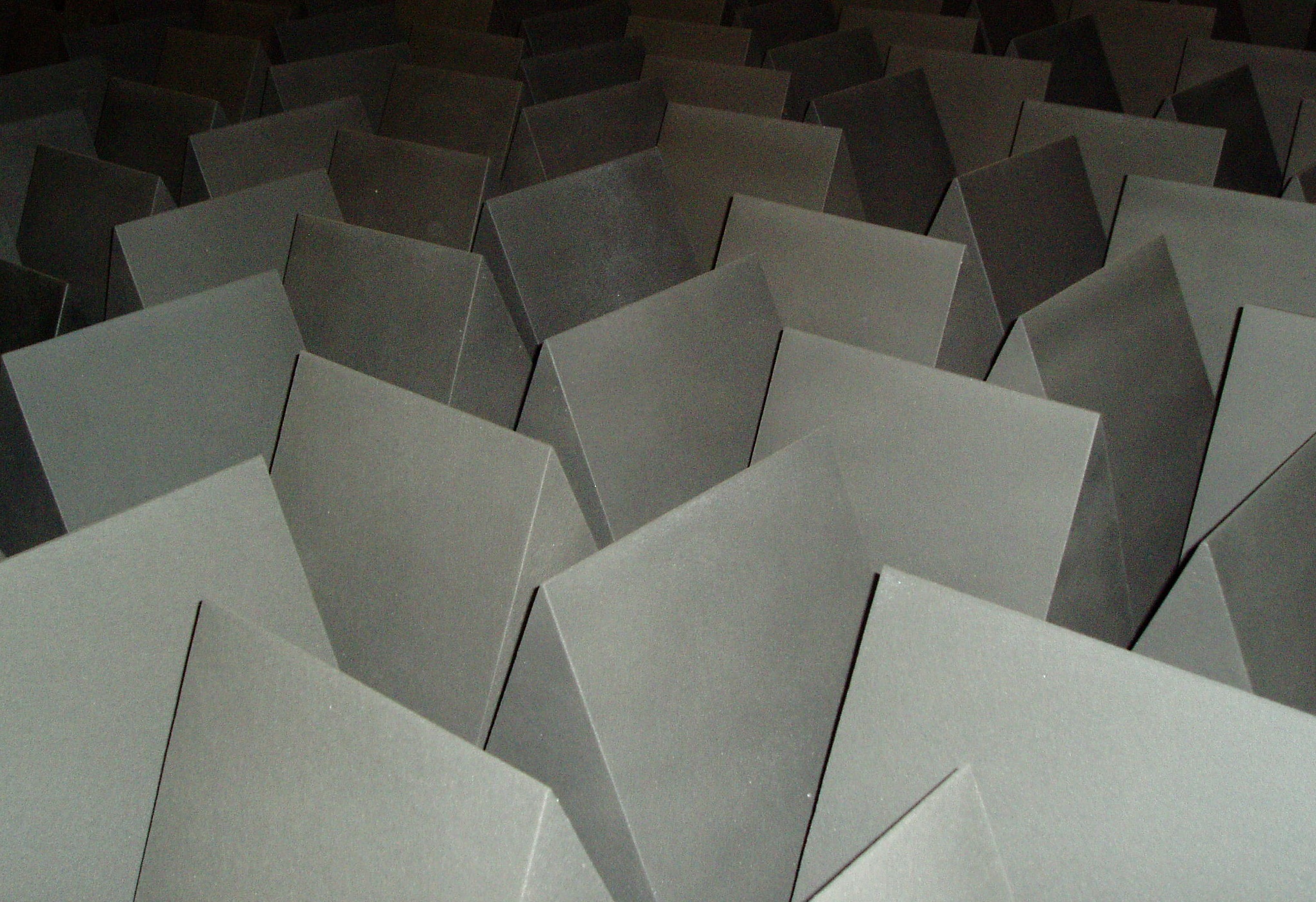
Anechoic Chambers in the UK are typically constructed by specialist anechoic chamber manufacturers (like AGS). The internal acoustic treatments use specially constructed ‘wedge pieces’ formed from highly absorbent foam (or sometimes from fibreglass). These are referred to a ‘anechoic wedges’. In special circumstances, where a more robust wall treatment is required, these may be enclosed in perforated metals, thus called ‘metal perforated anechoic wedges’ (the ‘insides’ are ethe same, only the outer construction changes).
These anechoic wedges ‘trap’ sound by converting acoustic energy to heat energy and prevent the waves from reflecting back towards the noise source. The wedges are fixed to all walls, the ceiling and floor with access to the space being a suspended mesh floor structure.
This is the general construction of a ‘Fully Anechoic Chamber’ i.e. all interior surfaces are anechoic. However, there is another type called a ‘hemi- anechoic chamber’ or ‘semi-anechoic chamber’. Hemi-anechoic chambers are chamber which have one reflecting plane all other surfaces are anechoic. Semi-Anechoic is sometimes used to mean a hemi-anechoic chamber, but functionally it refers to a chamber which has lots of anechoic elements but does not meet the definition/performance of the aforementioned.
Typically, hemi-anechoic chambers are of the same construction to a full chamber however the floor is a solid reflecting surface. These are usually used where measurements in this style of environment are more accurate to the purpose of the tests e.g. vehicular testing.
Who uses them and why?
Predominantly these chambers are used for various forms of acoustic research. Including calibration of equipment, psychoacoustic research and extremely precise sound measurements.
Hemi-anechoic chambers are typically used to test machinery where a solid flooring is more appropriate, such as automotive engine acoustic analysis and aerodynamic sound.
There is an enhanced version ‘RF Anechoic Chambers’. These chamber which also include Radio Frequency (RF) shielded chambers which stop electromagnetic signal from penetrating the chamber. (an example of this is the ‘BRUSH Transformers‘ test facility AGS completed). Typically used for aerospace equipment, sensitive consumer electronics, and secure applications.
Where is the largest anechoic chamber?
The largest anechoic chamber in the world is located in California, United States of America. Located at the Edwards Airforce Base, called the Benefield Anechoic Facility and is so large it can accommodate a full aircraft. It is over 80m long x 76m wide x 21m high making it the largest worldwide.
The ‘quietest’ room ever recorded was -24.5dB(A) in 2021 also located in the USA, in a laboratory in Minnesota (how can you have negative dB? Maybe we’ll cover that in another news article)
After prolonged times spent in an anechoic chambers people often start to say that they can hear their own body functions such as heartbeat and the sensation can become quite disorientating.